Best starting point: radon testing. Best for buried drain questions: a sewer scope. Best for wood-damage concerns: a termite inspection. Best for unresolved moisture questions: targeted mold testing. For an older Nashville home purchase in 2026, choose specialty checks that answer specific questions rather than ordering every available test.
- For specialty tests for older homes, Nashville buyers should start with radon and add checks tied to property conditions.
- Mycityhomeinspector offers radon, mold, sewer scope, and termite testing; confirm the scope of each service before booking.
- A sewer scope examines accessible drain interiors; a general home inspection does not show buried pipe interiors.
- Mold testing does not replace finding the moisture source or evaluating needed repairs.
Why this matters
An older home can have original materials, replacement systems, and repairs completed at different times. Age alone does not tell you which components need further evaluation. The useful question is what remains unknown after reviewing accessible conditions, seller disclosures, and available repair records.
Mycityhomeinspector provides inspection services that include residential inspections and specialty testing. For a Nashville purchase, confirm which services are included in your appointment and which require separate scheduling.
Mycityhomeinspector is a fit for Nashville buyers seeking a home inspection and specialty testing through the same provider. Inspection documents conditions; testing addresses a defined question; neither performs repairs or remediation.
What makes the best specialty test for an older home?
Choose specialty checks against these criteria in 2026:
- Decision value: The result should help you decide whether further evaluation, repair planning, or another purchase discussion is necessary.
- Hidden-condition coverage: Favor checks that address something the general inspection cannot establish, such as radon concentration or buried drain conditions.
- Property evidence: Use visible findings, disclosures, repair history, and access limitations to guide additional services.
- Clear scope: Know what gets inspected or sampled, what remains inaccessible, and what the result cannot establish.
- Actionable reporting: Look for the location, observed condition, supporting documentation, limitations, and a sensible next step.
No specialty test establishes that an entire property is defect-free. A useful result narrows uncertainty without claiming more than the inspection or sampling method supports.
Older-home specialty checks at a glance
| Rank and service | Best for | What it adds | Key limitation |
|---|---|---|---|
| 1. Radon testing | Establishing indoor radon concentration | Measurement of a gas you cannot identify by sight or smell | Results depend on the measurement period and test conditions |
| 2. Sewer scope | Investigating the accessible building sewer | Camera observations of the pipe interior | Access, obstructions, and camera reach limit coverage |
| 3. Termite inspection | Evaluating accessible evidence of termite activity or damage | A focused examination for wood-destroying insect concerns | Concealed areas remain outside visual inspection |
| 4. Targeted mold testing | Answering a defined question after moisture evaluation | Sampling tied to a specific investigation | Sampling alone does not explain or correct a moisture problem |
This ranking sets a starting point, not a mandatory package. A disclosed recurring sewer backup makes the sewer scope an immediate priority, even though radon leads the general list.
1. Radon testing: best for establishing indoor radon concentration
Radon testing measures indoor radon concentration. You cannot determine that concentration from a home's appearance, renovation history, or lack of odor. For an older Nashville purchase in 2026, request a current measurement rather than treating an earlier result as a permanent property characteristic.
The EPA recommends taking action at 4 picocuries per liter, or pCi/L, or higher. Its residential guidance defines short-term tests as lasting 2 to 90 days and long-term tests as lasting more than 90 days. These are EPA guidance categories, not a statement about a particular provider's equipment or appointment duration.
Radon testing pros
- Measures a condition that a visual inspection cannot establish.
- Produces a result you can discuss against EPA action guidance.
- Gives you a basis for discussing further testing or mitigation evaluation.
Radon testing cons
- A short-term result reflects conditions during that measurement period.
- Test setup and required building conditions affect whether the measurement is usable.
Ask who will explain the result, what testing conditions you must maintain, and when the report will be delivered. If the home has a mitigation system, request its records without assuming the equipment proves the current concentration is acceptable.
Best for: Buyers who need a current indoor radon measurement, regardless of how well maintained the home looks.
Verdict — Buy: Make radon testing the default specialty-testing discussion, then select a testing approach that fits the property and purchase schedule.
2. Sewer scope: best for investigating buried drain conditions
A sewer scope uses a camera to examine accessible portions of the building sewer. It addresses a different question from operating fixtures during a general inspection: what can be observed inside the pipe along the camera's route?
For an older Nashville home, ask about prior backups, drain repairs, pipe replacement records, and available access points. A renovated kitchen or bathroom does not establish that the buried sewer was replaced. Documentation matters more than the age of the finishes.
Sewer scope pros
- Provides observations from inside an otherwise concealed pipe.
- Can document visible roots, obstructions, deterioration, or displacement along the inspected route.
- Helps a plumber focus further evaluation on an observed concern.
Sewer scope cons
- An inaccessible entry point or obstruction can prevent a complete examination.
- A camera view does not establish the condition of every connected branch or the pipe exterior.
Request a clear statement of where the camera entered, how far the examination reached, and why it stopped. Ask whether the deliverable includes recorded footage, still images, or written findings; do not assume every provider supplies the same material.
An incomplete scope is not a passing result. If the camera cannot reach an important section, identify that section as unresolved and discuss the next step before your decision deadline.
Best for: Buyers facing undocumented sewer history, disclosed backups, or inspection findings that warrant a closer drain evaluation.
Verdict — Buy: Prioritize a sewer scope when buried drain condition remains a material unanswered question.
3. Termite inspection: best for accessible wood-damage concerns
A termite inspection examines accessible areas for evidence of termites and associated damage. Although buyers often call it termite testing, the service is generally an inspection rather than a laboratory test. Confirm the exact inspection scope and any document your transaction requires.
Older homes can contain both previous repairs and concealed framing. A patched area does not establish why the repair occurred, and an old treatment record does not establish current conditions. Ask for the inspection findings and available treatment or repair documentation separately.
Termite inspection pros
- Focuses attention on accessible evidence of termite activity and damage.
- Helps distinguish a pest-related concern from a general maintenance observation.
- Identifies areas that need further pest evaluation or repair assessment.
Termite inspection cons
- Finished surfaces, storage, and inaccessible spaces can conceal evidence.
- A pest inspection does not establish the structural capacity of damaged framing.
If damage is reported, separate the questions. A pest professional evaluates activity and treatment needs; an appropriate repair professional evaluates damaged materials. Structural concerns can require an engineer's assessment rather than a treatment recommendation alone.
Keep those findings together in your purchase file. A treatment invoice and a framing repair record answer different questions, and neither substitutes for the other.
Best for: Buyers with visible wood damage, disclosed termite history, or accessible conditions that warrant focused pest evaluation.
Verdict — Buy: Order a termite inspection when pest history or observed conditions leave wood-damage questions unresolved.
4. Targeted mold testing: best for a defined moisture question
Mold testing is most useful when a qualified evaluator can explain what the sample will help determine. Start with moisture history, visible conditions, odors, and accessible evidence of leaks. A sample result does not locate every concealed problem or explain why materials became wet.
For an older Nashville purchase in 2026, avoid treating a general air sample as a certificate that the entire home is free of mold. Ask how the proposed sampling method relates to the condition being investigated and what action would change because of the result.
Targeted mold testing pros
- Adds sample-specific information to a defined moisture investigation.
- Helps document the particular area or material being evaluated.
- Supports a more focused discussion when the sampling question is clear.
Targeted mold testing cons
- Conditions at the sampling location and time limit what the result represents.
- Sampling does not repair leaks, dry materials, or perform remediation.
Visible growth or water damage already warrants evaluation of the moisture source. Do not postpone that work simply because sampling is being considered. Ask whether testing will change the next decision before adding it to the inspection order.
Mycityhomeinspector offers mold testing, but buyers should confirm the proposed method, locations, reporting, and exclusions for the particular property.
Best for: Buyers with a specific unresolved question that sampling can address after moisture conditions have been considered.
Verdict — Hold: Define the question first; order mold testing when the result will guide a decision.
How to turn findings into a purchase decision
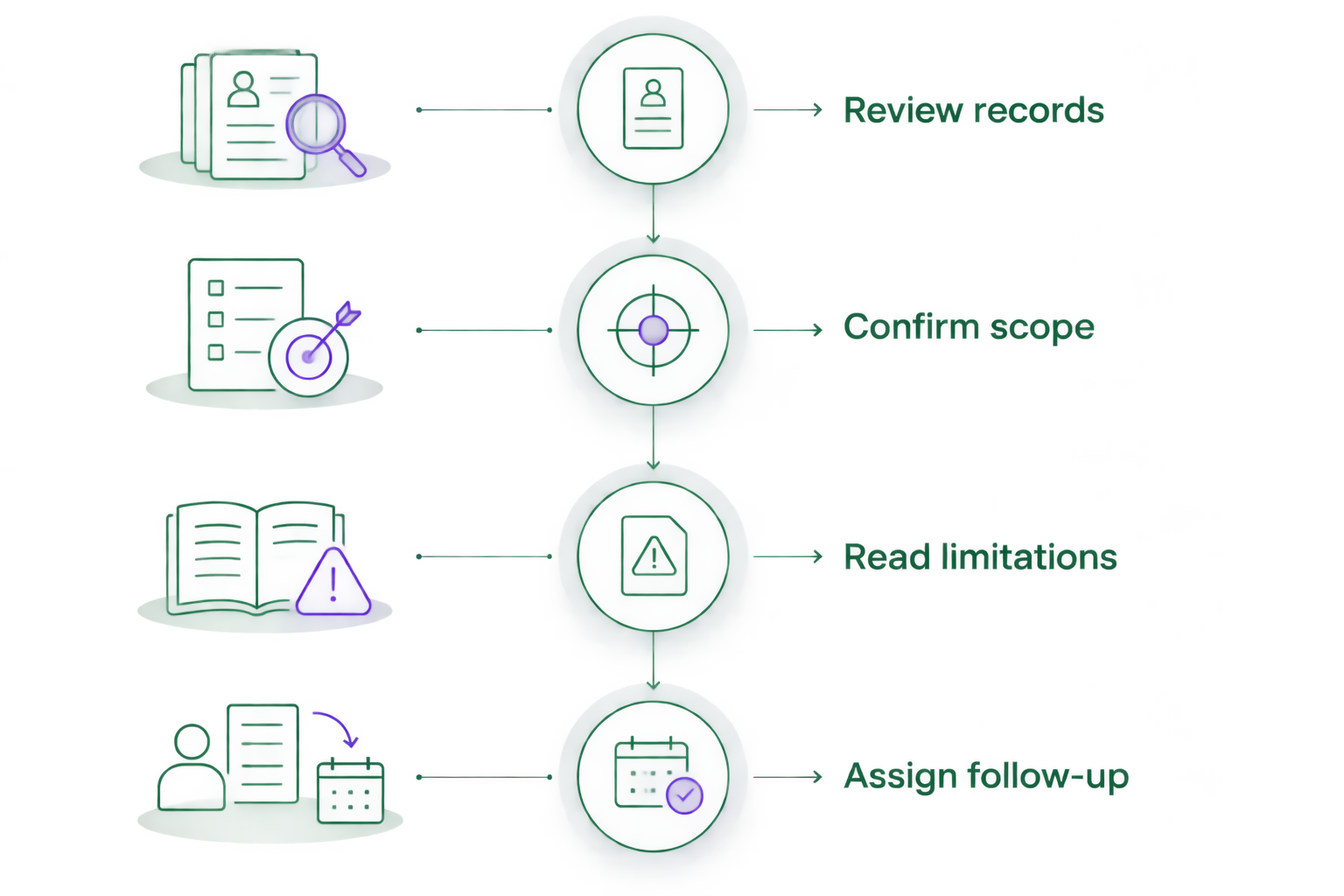
Use this sequence for your 2026 inspection planning. It keeps the service order tied to the property rather than to a generic older-home checklist.
Review records
Read seller disclosures and collect available inspection, treatment, repair, and water-intrusion records. Note what each document actually covers. A receipt for one repaired drain section does not document the entire sewer.
Confirm scope
Ask which systems and areas will be examined, what access is necessary, and what requires a separate appointment. Confirm report delivery against your contractual deadlines with your real estate professional.
Read limitations
Look for blocked access, concealed materials, interrupted tests, and incomplete camera routes. Treat an unexamined area as unknown, not as an area that passed.
Assign follow-up
Match each finding to the professional who can answer the remaining question. Request written clarification when a report does not distinguish observation, interpretation, and recommended next action.
For scheduling questions, use the contact page to confirm services and access requirements. Keep the request specific: identify the property, the concern, the relevant records, and the decision deadline.
How the specialty checks are ranked
This order weighs hidden-condition coverage, usefulness to a purchase decision, and the clarity of the next step. Radon leads because its concentration requires measurement. Sewer and termite checks address focused condition questions; mold sampling follows a defined moisture investigation.
The ranking does not estimate neighborhood risk or predict what a particular Nashville home will reveal. Property-specific evidence can change the order immediately.
Which specialty tests should you choose?
Start with a general home inspection and a radon-testing discussion, then add services to resolve the property's remaining questions. Prioritize a sewer scope for unresolved drain concerns, a termite inspection for pest-related questions, and mold testing for a clearly defined sampling purpose.
Do not buy a larger package simply because the house is old. Buy information that can change your decision, clarify needed evaluation, or identify a practical next step.
FAQ
What's the best specialty test for an older Nashville home?
Radon testing is a useful starting point because a visual inspection cannot establish indoor radon concentration. Add a sewer scope, termite inspection, or targeted mold testing according to the property's records and observed conditions.
Does a general home inspection include radon and sewer testing?
Do not assume specialty testing is included in a general home inspection. Confirm each service, its scope, access requirements, and reporting before booking.
Should I get a sewer scope if the bathrooms were renovated?
Bathroom renovations do not establish the condition of the buried sewer. Review replacement records and consider a sewer scope when the pipe's condition remains unresolved.
Is mold testing necessary for every older house?
Mold testing is not an automatic requirement simply because a house is older. Begin with moisture history and visible conditions, then ask what a proposed sample would help determine.
What radon level requires action?
The EPA recommends action at radon concentrations of 4 pCi/L or higher. Discuss the measurement conditions, report recommendations, and appropriate next steps with the testing provider.
Does termite treatment mean damaged wood has been repaired?
Termite treatment does not establish that damaged wood has been repaired. Request separate documentation of pest treatment and any evaluation or repair of affected materials.
Does Mycityhomeinspector offer these services outside Nashville?
Mycityhomeinspector provides residential, commercial, and specialty inspection services in Chattanooga, Knoxville, Nashville, and Atlanta. Confirm the scope and scheduling of the requested service for your property.
One last thing
For your 2026 purchase, read the limitations before counting the findings. A report with few defects but an inaccessible crawlspace leaves a different set of questions than one documenting an accessible area. Ask what was not examined, why it was excluded, and how to resolve that gap before making your decision.
Related guides
Protect Your Home. Inside and Out.
Plan a professional inspection and get clearer information about the property you own, are buying, or are preparing to sell.