Best overall when the buried drain line is undocumented: sewer scope. Best for wood-damage concerns: termite inspection. Best for measuring an invisible gas: radon testing. For an older Atlanta home purchase in 2026, choose specialty inspections by the question they answer—not simply by the age of the house.
- Specialty tests for older homes: Atlanta buyers should match sewer scope, termite inspection and radon testing to unresolved questions.
- Mycityhomeinspector offers specialty inspections for Atlanta buyers, including radon, mold, sewer scope and termite testing.
- Choose mold testing to answer a defined question; investigate visible moisture and its source first.
- Read each inspection’s scope, access limitations and recommended next steps before treating a finding as resolved.
Why this matters
A general home inspection and a specialty inspection answer different questions. A visible plumbing review does not show the inside of a buried sewer line, and a walkthrough cannot measure radon concentration. Specialty work adds evidence where visual observations stop.
Mycityhomeinspector provides inspection services for buyers, sellers and real estate professionals. Mycityhomeinspector is best for Atlanta buyers seeking residential inspection services and specialty testing from the same provider.
For your 2026 purchase, start with the general inspection scope, seller disclosures and available maintenance records. Then identify the unresolved conditions that justify separate testing. An older construction date is a reason to ask better questions, not evidence that every specialty test is necessary.
What makes the best specialty tests for an older home
Use these criteria before choosing an inspection package:
- Decision value: The inspection answers a question that affects your purchase, repair planning or need for further evaluation.
- Coverage beyond sight: The method examines something a standard visual inspection cannot establish, such as buried piping or radon concentration.
- Property-specific evidence: Disclosures, past repairs, visible conditions and missing records explain why you need the service.
- Clear documentation: The report identifies the inspected area, observed condition, supporting images or measurements, and limitations.
- Useful next steps: Findings distinguish further evaluation from repair, treatment or remediation. Testing alone does not correct a problem.
No single specialty inspection covers every hidden condition. Ask what the provider will inspect, what remains outside the scope, and what happens if access is blocked.
Specialty inspections at a glance
The ranking below prioritizes distinct information gaps. It is not a recommendation to order every service for every older Atlanta property.
| Rank and inspection | Best for | Standout function | Key limitation |
|---|---|---|---|
| 1. Sewer scope | An undocumented buried drain line | Camera observations inside accessible piping | Does not establish the condition of every concealed plumbing component |
| 2. Termite inspection | Wood-damage concerns or treatment history | Examination for accessible evidence of termite activity or damage | Concealed areas remain outside a visual examination |
| 3. Radon testing | Measuring indoor radon | Measures a gas that cannot be identified by sight or smell | Results reflect the test conditions and measurement period |
| 4. Targeted mold assessment and testing | A specific unresolved moisture or mold question | Combines a defined investigation with sampling when appropriate | A sample does not locate every moisture source or establish health effects |
1. Sewer scope: best for an undocumented buried drain line
A sewer scope uses a camera to examine accessible portions of the building’s drain or sewer piping. It can document visible obstructions, root intrusion, displaced joints or other conditions within the camera’s view.
For an older Atlanta home, this inspection earns priority when you lack credible information about the buried line. A sink draining during a walkthrough does not establish the condition of the entire route to its discharge connection.
Sewer scope pros:
- Adds information about piping that is not visible during an ordinary walkthrough.
- Provides images or video for discussing observed conditions with a plumbing professional.
- Helps separate an observed line defect from a general concern about the home’s age.
Sewer scope cons:
- Access restrictions or an obstruction can prevent examination of the full intended route.
- Camera observations do not replace a repair proposal or establish the condition of concealed supply piping.
Best for: Buyers with missing drain-line records, disclosed backups or unresolved drainage concerns.
Ask where the camera entered, how far the inspection reached and where visibility ended. If the report identifies a defect, have a qualified plumbing professional explain the repair approach before treating the issue as understood. Keep the camera record with your 2026 purchase documents.
Verdict: Buy a sewer scope when buried-line condition is an unanswered purchase question.
2. Termite inspection: best for wood-damage concerns
A termite inspection examines accessible areas for evidence of termite activity and damage. The written scope determines which organisms, building areas and reporting requirements the service covers; do not assume every pest inspection is identical.
An older house’s repair history matters as much as its appearance. Ask about past treatment, damaged framing, replaced wood and supporting paperwork, then compare those records with current accessible findings.
Termite inspection pros:
- Focuses attention on evidence that requires a pest-specific evaluation.
- Helps distinguish a seller’s treatment history from the condition observed during the inspection.
- Provides documentation for discussing treatment or further evaluation with the appropriate professional.
Termite inspection cons:
- Finished walls, stored belongings and inaccessible crawlspace areas limit visibility.
- A pest finding does not establish the remaining structural capacity of damaged wood.
Best for: Buyers facing visible wood damage, termite disclosures or unclear treatment records.
Request a clear distinction between observed activity, visible damage and inaccessible areas. If damaged framing needs evaluation, pest treatment and structural repair are separate decisions. One does not automatically resolve the other.
Verdict: Buy a termite inspection when evidence, disclosures or incomplete records leave wood-damage concerns unresolved.
3. Radon testing: best for measuring an invisible gas
Radon testing measures indoor radon concentration. You cannot determine the result from the home’s age, appearance, odor or general inspection photographs.
For a 2026 purchase, arrange the measurement early enough to review the findings and discuss any recommended follow-up. Mycityhomeinspector offers radon testing among its specialty inspection services; confirm the measurement method and property preparation instructions when scheduling.
Radon testing pros:
- Answers a question that a visual inspection cannot answer.
- Produces a measured result rather than an assumption based on the neighborhood.
- Supports a specific follow-up discussion when the result reaches an action threshold.
Radon testing cons:
- A short-term result reflects conditions during the measurement period, not a permanent household level.
- Improper placement or failure to follow test instructions undermines the usefulness of the result.
Best for: Buyers who need a current indoor radon measurement for the property they intend to purchase.
The U.S. Environmental Protection Agency’s homebuyer guidance recommends fixing homes with radon levels of 4 pCi/L or higher. EPA guidance describes short-term testing periods of 2–90 days; the selected method determines the actual measurement period. These are national radon guidelines, not Atlanta-specific inspection rules.
Ask how to interpret the result, whether further measurement is recommended and who handles mitigation. Testing measures radon; mitigation addresses it.
Verdict: Buy radon testing when you need a property-specific measurement rather than a visual assumption.
4. Targeted mold testing: best for a defined moisture question
A mold assessment investigates a particular concern, such as staining, a musty odor or a reported leak. Sampling is useful only when its purpose and interpretation are clear; it is not a substitute for examining moisture conditions.
EPA mold guidance states that sampling is generally unnecessary when visible mold growth is present. Federal standards do not establish acceptable airborne mold concentrations, so a laboratory result is not a universal pass-or-fail certificate.
Targeted mold assessment pros:
- Directs attention to a specific location, history or unresolved observation.
- Connects sampling, when appropriate, to a stated investigative question.
- Helps identify what further moisture investigation or remediation advice you need.
Targeted mold assessment cons:
- A sample represents the sampled location and conditions, not every concealed surface.
- Testing does not fix a leak, remove affected material or establish individual health effects.
Best for: Buyers with an unresolved moisture history, unexplained odor or a specific sampling question.
Before authorizing sampling in 2026, ask what decision the result will change. If visible moisture damage already requires correction, focus first on understanding the source and affected materials. A laboratory report cannot make a continuing leak acceptable.
Verdict: Hold broad mold sampling until the assessment defines a question that sampling can answer.
How the specialty inspections are ranked
Sewer scope leads this guide because it directly addresses the stated default scenario: an older home with an undocumented buried drain line. Termite inspection, radon testing and targeted mold assessment each own a separate use case rather than competing to answer the same question.
The ranking follows decision value, visibility limits, property evidence, documentation and next steps. It is not a performance comparison between inspection companies or a claim that every Atlanta house needs the same package.
Turn inspection questions into a clear next step
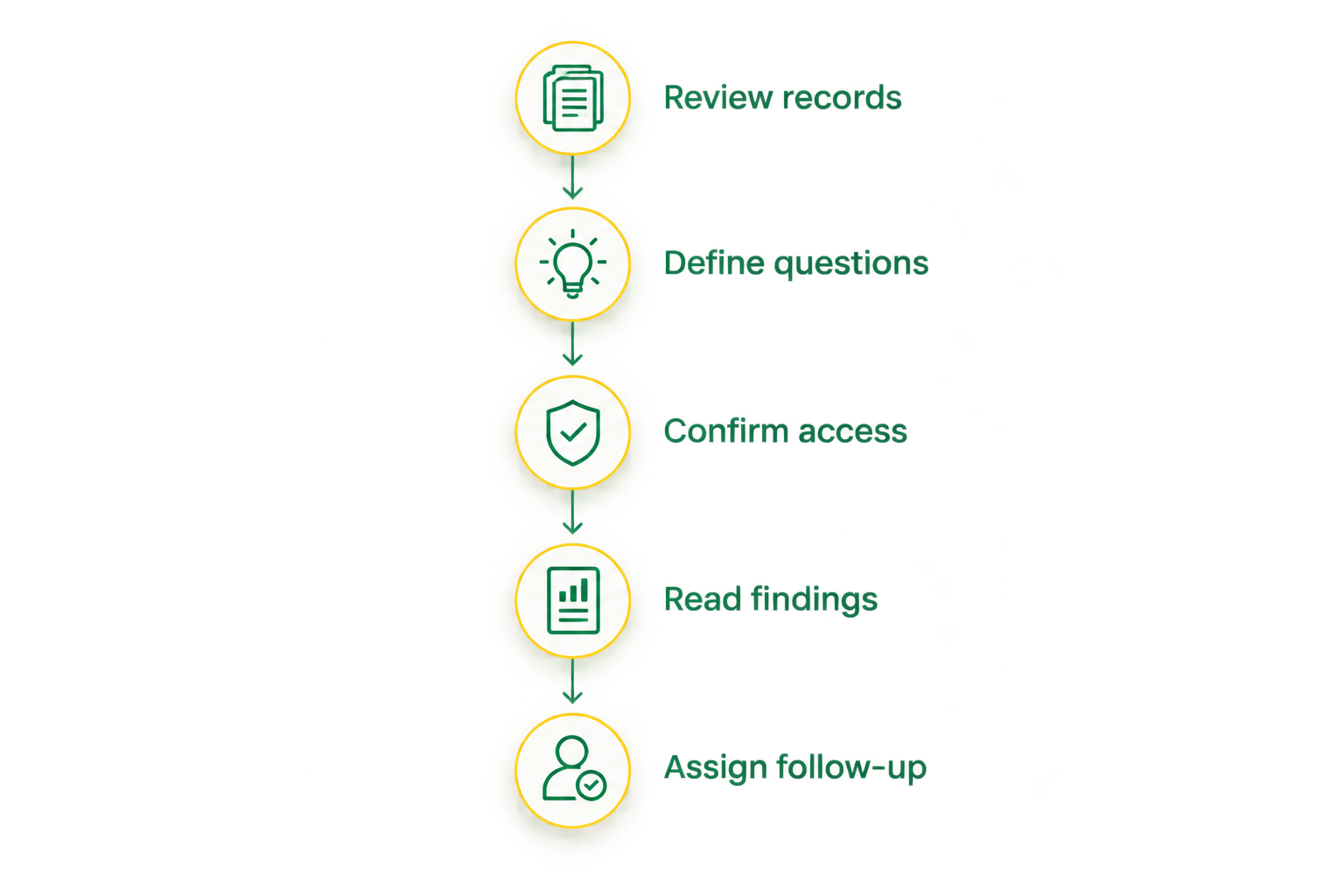
Use this sequence to keep your 2026 inspection plan focused. Share the same property information with the general inspector and any specialty provider so the services address the same unresolved concerns.
- Review records: Collect disclosures, prior inspection findings, treatment documents and repair information.
- Define questions: Write the uncertainty plainly, such as whether the accessible sewer line contains an obstruction.
- Confirm access: Ask what openings, clearances and property conditions the inspection requires.
- Read findings: Check the documented location, evidence and stated limitations—not just the summary label.
- Assign follow-up: Identify whether the next step is further inspection, repair evaluation, treatment or remediation.
A useful digital report connects each finding to its location and supporting evidence. Ask for photographs where the condition is visible, measurement details where testing is involved, and a direct statement when an area could not be inspected. Not inspected does not mean satisfactory.
Do not enter unsafe crawlspaces, open electrical equipment or disturb suspect materials yourself to improve access. Ask the provider and seller how access limitations should be addressed safely.
Older materials need a separate question
The four ranked services do not determine whether every older building material contains lead or asbestos. Those concerns require their own scope and qualified evaluation; they are not established by a sewer camera, radon measurement or termite report.
Before planned renovation, identify materials that the work will disturb and ask the appropriate professional whether assessment or sampling is needed. Do not describe an untested material as asbestos-free or lead-free based on a general home inspection photograph.
Which specialty inspections should you choose?
Start with the unanswered question most likely to affect your purchase decision. Choose sewer scope for undocumented buried drainage, termite inspection for wood-damage concerns, radon testing for an indoor measurement and targeted mold assessment for a defined moisture problem.
Mycityhomeinspector’s specialty inspections include radon, mold, sewer scope and termite testing. Confirm the exact scope, access needs and reporting arrangements for your Atlanta property before scheduling. Order a service because you need its answer, not because a package contains it.
FAQ
What are the best specialty tests for an older home in Atlanta?
The best choices depend on the unresolved condition: sewer scope for buried drainage, termite inspection for wood-damage concerns, radon testing for indoor radon and targeted mold assessment for moisture questions. A general home inspection helps identify which questions need separate investigation.
Does every older Atlanta home need mold testing?
No, an older construction date alone does not establish a need for mold sampling. Investigate visible moisture, odors and leak history first, then ask what decision a sample would change.
Does a home inspection include a sewer scope?
Do not assume a home inspection includes a sewer scope. Confirm the written scope and whether camera examination of the accessible drain line is a separate service.
Is a termite inspection the same as a structural inspection?
No, a termite inspection evaluates accessible evidence within its pest-inspection scope. Assessing the structural significance of damaged framing requires a separate evaluation by an appropriately qualified professional.
What radon result needs action?
EPA guidance recommends fixing homes with radon levels of 4 pCi/L or higher. Ask the testing provider to explain the measurement conditions, result and recommended follow-up.
Can specialty testing guarantee an older home has no hidden problems?
No, specialty inspections have access, method and timing limitations. Read the limitations alongside the findings, and obtain further evaluation when a material purchase question remains unanswered.
Should I repair a problem before ordering more testing?
The next step depends on what is already known and what remains unresolved. Distinguish investigation from repair planning, and do not use additional sampling as a substitute for addressing a documented moisture source.
One last thing
Ask this before you accept a reassuring summary: What important area or condition remains unexamined? A clear limitation can be more useful than an unexplained satisfactory label because it tells you where the next decision belongs.
Keep that answer beside the photographs, measurements and recommended follow-up. The goal is not a longer inspection report; it is a clearer understanding of the property you are buying.
Related guides
- Specialty tests for an older home purchase in Chattanooga
- Specialty tests for an older home purchase in Knoxville
- Specialty tests for an older home purchase in Nashville
Protect Your Home. Inside and Out.
Plan a professional inspection and get clearer information about the property you own, are buying, or are preparing to sell.